How businesses can secure cabling systems against downtime, tampering, and cyber threats in today’s hybrid work environments
Every business depends on its low-voltage network, whether for internet, VoIP calls, surveillance systems, or access control. Yet many organizations overlook the fact that this cabling infrastructure is also a target for both physical intrusions and cyberattacks.
In today’s hybrid work environment, securing your network goes beyond firewalls and software. It starts with how your infrastructure is designed, installed, and protected on-site.
In this blog, you’ll learn the most effective ways to safeguard low-voltage cabling against downtime, tampering, and data risks, so your business stays connected and secure.
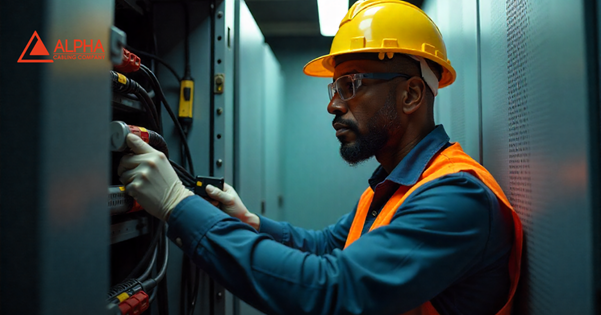
Why Low-Voltage Security Matters
Low-voltage cabling systems are the backbone of modern business infrastructure. They connect offices, support video meetings, power smart devices, and secure facilities through IP surveillance.
- According to the Federal Communications Commission (FCC), U.S. businesses face billions in annual losses due to cyberattacks, many of which exploit weak network setups.
- Meanwhile, the Occupational Safety and Health Administration (OSHA) highlights the importance of securing cabling routes to avoid accidents and unauthorized tampering.
Best Practices for Securing Low-Voltage Infrastructure
1. Control Physical Access to Equipment
Protecting your cabling starts with securing its endpoints and pathways.
- Use locked server/network cabinets and restrict access to authorized staff only.
- Keep cabling pathways organized, labeled, and off-limits to reduce tampering or accidental damage.
- Deploy environmental sensors (temperature, water leak, humidity) to monitor equipment rooms.
2. Standardize Cabling and Network Design
Consistency improves both performance and security.
- Follow TIA/EIA standards for structured cabling to ensure reliability.
- Use shielded cables (Cat6a or fiber) for enhanced data protection and speed.
- Document and label every cable for easier monitoring and troubleshooting.
According to the Building Industry Consulting Service International (BICSI), standardized cabling reduces vulnerabilities and simplifies upgrades across multiple sites.
3. Integrate Cybersecurity into Low-Voltage Systems
Hybrid work has blurred the line between physical cabling and digital risk.
- Encrypt VoIP and video conferencing traffic to protect remote communications.
- Install firewalls and intrusion detection systems at all network entry points.
- Ensure IP cameras, access control systems, and wireless access points are regularly patched.
Takeaway: Every connected device on your low-voltage network is a potential cyber entry point—secure them all.
4. Implement Multi-Site Security Monitoring
For businesses with multiple offices or campuses, centralized visibility is key.
- Use cloud-based monitoring platforms for cameras, access control, and cabling health.
- Apply unified documentation across all locations for faster issue resolution.
- Train onsite staff to recognize both physical tampering and cyber warning signs.
5. Conduct Ongoing Maintenance & Risk Assessments
Security is not a one-time project—it requires proactive management.
- Schedule regular cable testing and audits to detect vulnerabilities early.
- Review hybrid work policies to ensure secure remote connectivity.
- Update security protocols as new technologies and threats evolve.
According to Cybersecurity & Infrastructure Security Agency (CISA), continuous monitoring and training significantly reduce the likelihood of successful attacks.
Conclusion
Low-voltage cabling is the foundation of today’s connected business world, but without proper protection, it can also become a hidden vulnerability.
By controlling physical access, standardizing cabling, integrating cybersecurity, monitoring multi-site networks, and committing to ongoing maintenance, organizations can protect both their infrastructure and their people.
Want to make sure your low-voltage network is secure, compliant, and ready for hybrid work? Contact Alpha Cabling today for a consultation. Let’s lock down your infrastructure, not just add cables.