
- 305 455-4390
Warehouse Connectivity: Solving the Challenges of Large Open Spaces
Warehouse connectivity is no longer a nice-to-have; it’s mission critical. In 2026, warehouses are the backbone of supply chain operations, powering barcode scanners, real-time inventory systems, automated guided vehicles (AGVs), handheld devices, VoIP communication, and IoT sensors. Yet large open spaces, high ceilings, metal racking, and moving vehicles create unique wireless and cabling challenges that standard office infrastructure simply can’t solve.
In this article, you’ll learn why warehouses struggle with Wi-Fi and network reliability, what structured cabling and wireless design strategies work best, and how businesses can future-proof their facilities with the right approach to low-voltage infrastructure.
Why Warehouse Connectivity Matters in 2026
The Rise of Real-Time Automation and IoT in Warehouses
Modern warehouses are no longer just storage spaces — they are smart operational centers. According to research on supply chain technology adoption, U.S. warehouses increasingly depend on real-time data for inventory management, automation, and workforce coordination.
- IoT sensors for temperature, humidity, and equipment status
- Automated vehicles and robotics
- RFID tracking and real-time location services (RTLS)
- Wireless scanning for inventory accuracy
Poor connectivity means system delays, data loss, and productivity issues — ultimately affecting order fulfillment and customer satisfaction.
Key Challenges of Warehouse Wi-Fi & Connectivity
1. Large Open Spaces With Complex RF Environments
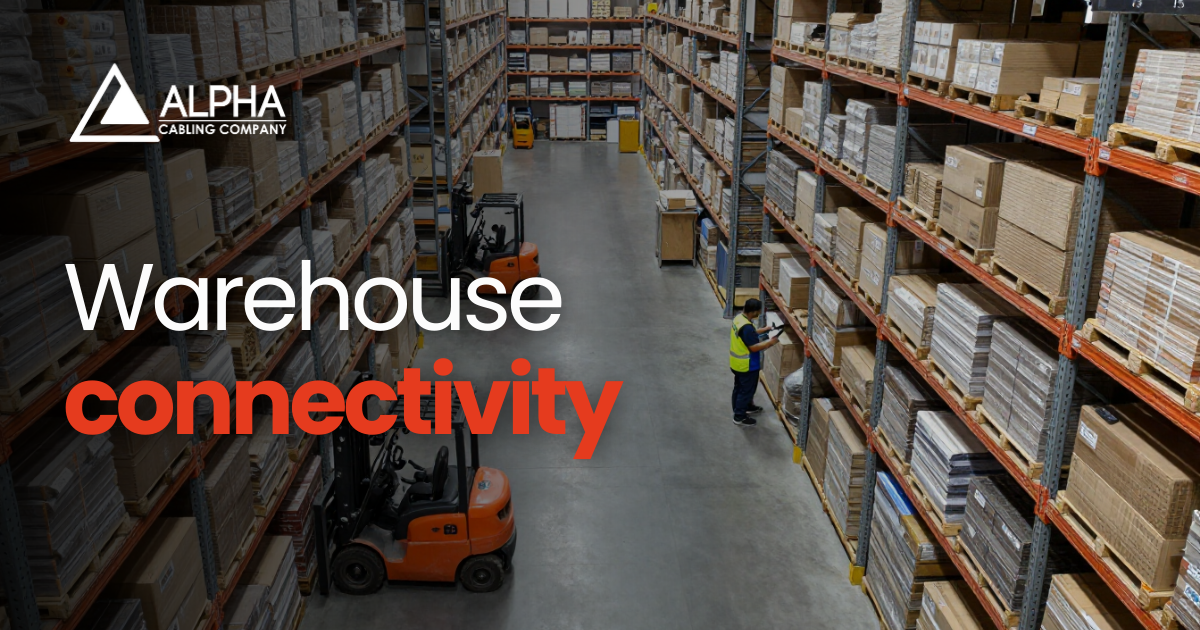
Warehouse environments often have high ceilings, long aisles, and wide open floors. These characteristics make it difficult for wireless signals to propagate evenly.
Challenges include:
- Signal reflections from metal shelving
- Dead zones where Wi-Fi doesn’t reach
- Interference from machinery and equipment
These conditions require strategic wireless planning, not just plug-and-play access points.
2. High Density of Wireless Devices
Modern warehouses run multiple devices simultaneously:
- Handheld scanners
- Tablets and mobile computers
- RFID readers
- VoIP phones
- Forklift terminals
Each device competes for network bandwidth. According to Cisco’s enterprise mobility reports, network performance in high-device environments degrades quickly without proper wireless domain design.
3. Compatibility With Warehouse Automation Systems
Warehouse automation systems, such as conveyors, AGVs, and smart cameras — require low latency, high reliability, and predictable connectivity. Traditional cabling and wireless configurations often fail to support the level of performance these systems demand.
How to Solve Warehouse Connectivity Challenges
1. Structured Cabling as the Foundation
Warehouse Wi-Fi performance is closely linked to the quality of structured cabling below it. Structured cabling provides a consistent, high-capacity backbone that supports:
- Wireless access point (WAP) backhaul
- VoIP and handheld device traffic
- PoE (Power over Ethernet) for wireless and IoT devices
Best Practices:
- Use Cat6A or higher cabling for PoE and higher bandwidth support
- Deploy fiber optic backbones between zones for scalable performance and distance handling
- Label and document all cabling for maintenance and future upgrades
According to the Telecommunications Industry Association (ANSI/TIA-568), structured cabling supports network scalability and reliability across all environments.
2. Strategic Wireless Access Point Placement
Placement matters more in warehouses than offices:
- Install access points (APs) to ensure even coverage down aisles
- Avoid placing APs close to metal racking or machinery
- Use directional antennas for focused coverage in long corridors
A heat-mapping wireless design can help visualize signal strength and identify dead zones before installation.
3. Power over Ethernet (PoE) for Device Support
PoE allows APs, cameras, and sensors to receive both power and data over one cable, which simplifies installation and reduces the need for electrical outlets at every access point.
Benefits of PoE:
- Reduced installation cost and complexity
- Centralized power and network control
- Support for high-power devices with PoE++
When planning a PoE deployment, ensure the structured cabling and switches support the power requirements without signal degradation.
4. Network Segmentation and Security
In warehouse environments, not all traffic should be on the same network. Segmentation improves both performance and security.
Consider segmenting traffic:
- Administrative systems
- Device telemetry (scanners, sensors)
- VoIP communications
- Guest or external network traffic
Network segmentation reduces congestion and limits security exposure.
5. Ongoing Testing, Monitoring, and Maintenance
Connectivity isn’t “set and forget.” Regular testing and monitoring ensure performance stays optimal as devices increase and workflows evolve.
Tasks include:
- Annual cable certification and testing
- Wireless site surveys after layout changes
- Monitoring for interference and bandwidth usage
Proper documentation and testing reduce downtime and enable faster issue resolution.
5 Benefits of a Well-Designed Warehouse Network
- Improved Operational Efficiency
Devices work reliably, reducing delays in picking, packing, and shipping. - Real-Time Inventory Accuracy
Wireless scanners update inventories instantly without signal drops. - Support for Automation and Robotics
Consistent connectivity ensures autonomous systems perform predictably. - Reduced Troubleshooting Time
Structured cabling and documentation make it faster to locate and fix issues. - Future-Ready Infrastructure
A scalable foundation supports growth, technology refreshes, and emerging systems like Wi-Fi 7 or AI-enabled sensors.
Conclusion
Warehouse Wi-Fi and connectivity are too important to leave to guesswork or ad-hoc deployments. The unique challenges of open spaces, high device density, and real-time operations require structured cabling, strategic wireless design, PoE support, and proactive maintenance.
When warehouses invest in solid infrastructure, the result is not just stable connectivity; it’s lower operational costs, faster productivity, and readiness for the technologies of 2026 and beyond. Your warehouse can be more than connected; it can be optimized.
Ready to build a warehouse network that works as hard as your operations do?
Call Alpha Cabling at 305-455-4390 or visit alphacablingco.com to schedule a professional infrastructure consultation and future-proof your facility today.